

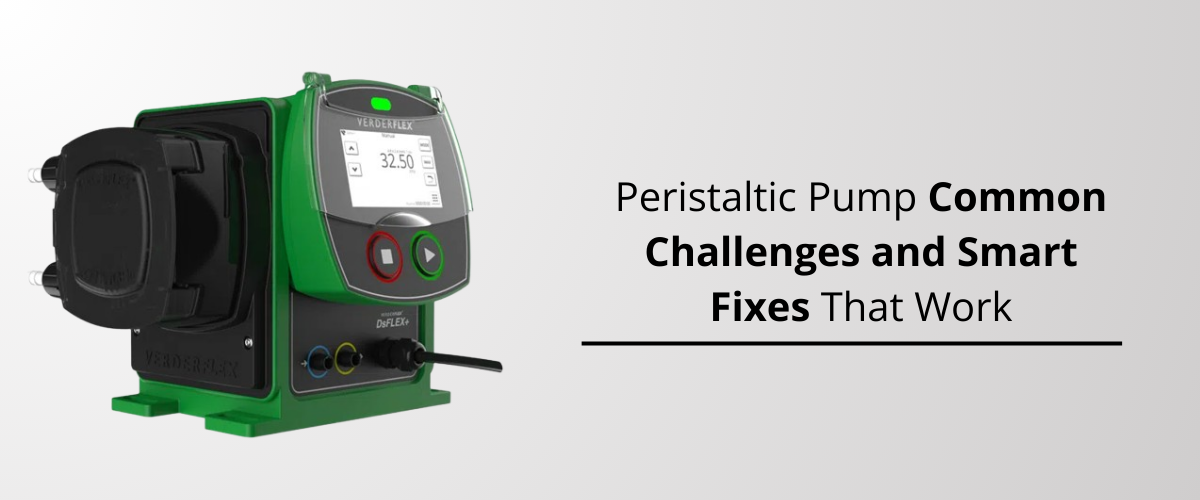
Peristaltic pumps are widely used in various industries, including pharmaceuticals, food and beverage, chemical processing, and water treatment. They are valued for their clean operation, accurate dosing, and ability to handle abrasive or viscous fluids.
Yet, like any equipment, peristaltic pumps are not without issues. Hose wear, leakage, inconsistent flow, or overheating can significantly reduce performance if not properly addressed. The good news is that most of these challenges have simple solutions.
Let’s take a closer look at the most common problems and the smart fixes that keep peristaltic pumps running efficiently.
1. Hose Wear and Tear
Why it Happens
The hose is the heart of a peristaltic pump. Since rollers compress the tubing repeatedly to move fluid, the hose is under constant stress. Over time, this leads to cracks, leaks, or reduced pumping efficiency. Over weeks or months of continuous operation, the hose can begin to flatten, harden, or develop micro-cracks.
If ignored, this wear can result in leaks, contamination of fluids, or a noticeable drop in pumping efficiency. The problem usually shows up faster when the pump is running dry, when abrasive particles are present in the liquid.
How to Fix It
– Choose tubing materials that match your fluid and application.
– Avoid running the pump dry, which accelerates wear.
– Inspect hoses regularly and replace them on a set schedule.
– Proactive hose replacement costs less than dealing with unplanned downtime.
– Keeping a few spare hoses on hand and rotating them in service can extend the overall lifespan of the pump.
2. Inconsistent Flow and Pulsation
Why it Happens
Peristaltic pumps naturally produce pulsed flow. While fine in many cases, dosing or laboratory applications may require smoother, more consistent delivery. But in industries where precise dosing, analytical testing, or laboratory research is involved, pulsation can cause inconsistent delivery or inaccurate measurements. Even small variations in flow can lead to wasted material or flawed results.
How to Fix It
– Use a pulse dampener to reduce flow variation.
– Consider pumps with multi-roller designs for greater precision.
– Replace tubing that has lost elasticity, as it increases pulsation.
– Use flow sensors in critical dosing applications to maintain accuracy.
3. Overheating During Operation
Why it Happens
Running a pump at high speeds or under heavy loads for long periods can generate heat. This affects both the motor and tubing, reducing efficiency. Overheating reduces efficiency, shortens hose life, and may cause motor failure. Another common cause is excessive pressure buildup inside the hose, which can force fluid past seals or fittings.
Poor ventilation around the pump or placing it in a confined space can also trap heat, making it difficult for the system to cool naturally. In some cases, using tubing that isn’t designed for high-temperature applications accelerates wear and raises operating temperatures even further.
How to Fix It
– Operate within the manufacturer’s recommended limits.
– Schedule cooling breaks during continuous operation.
– Invest in pumps with thermal protection systems.
4. Leakage and Spillage
Why it Happens
Leaks often happen due to worn hoses, poor fittings, or tubing material that isn’t compatible with the chemical being pumped. For industries like food or pharma, even a small leak is a serious issue. Even minor leaks are serious in food, pharma, or chemical environments. Another common cause is excessive pressure buildup inside the hose, which can force fluid past seals or fittings.
How to Fix It
– Match tubing material to the fluid type.
– Tighten and inspect fittings regularly.
– Install leak detection systems for early warnings.
– Use secondary containment trays in sensitive areas to minimise risks.
5. Reduced Pumping Efficiency
Why it Happens
A pump that once delivered accurate flow may start to underperform. This is usually caused by hose fatigue, misaligned rotors, or incorrect speed settings. In some cases, efficiency drops gradually, making it harder for operators to notice until production quality is affected.
How to Fix It
– Recalibrate pump settings regularly.
– Replace worn hoses promptly.
– Ensure the pump is installed on a stable, vibration-free surface.
– Track performance trends over time to spot early warning signs.
6. Excessive Noise and Vibration
Why it Happens
Peristaltic pumps are generally quieter than other positive displacement pumps. However, worn rollers, misaligned tubing, or loose mounts can cause unnecessary noise and vibration. If ignored, this extra vibration may shorten the lifespan of nearby components as well.
How to Fix It
– Replace rollers showing uneven wear.
– Install tubing correctly with the right tension.
– Use vibration-dampening mounts in sensitive environments.
– Check the pump’s foundation and tighten mounting bolts periodically.
7. Compatibility with Harsh Fluids
Why it Happens
Not all tubing is built for aggressive chemicals or abrasive slurries. Using the wrong type can lead to rapid degradation. In severe cases, this can cause safety hazards or contamination of critical processes. When this happens, the pump not only loses efficiency but also risks leaks and contamination. In industries like pharmaceuticals or water treatment, this can result in costly rework or compliance issues.
How to Fix It
– Consult a chemical compatibility chart when selecting tubing.
– Test new fluids on a small scale before full use.
– Choose reinforced or speciality hoses for difficult applications.
– Work with suppliers to find application-specific tubing grades.
8. Startup Problems and Airlocks
Why it Happens
Sometimes pumps fail to prime due to trapped air or improper hose setup. This is especially common when the pump is restarted after long idle periods or when handling low-viscosity fluids. This issue is more common when suction lines are long, when fluids have low viscosity, or when the pump has been idle for extended periods. Left unresolved, frequent airlocks can reduce the pump’s overall reliability.
How to Fix it
– Use self-priming models when frequent restarts are expected.
– Keep suction lines as short and direct as possible.
– Manually prime the pump before operation.
– Tilt the pump head slightly to allow air to escape.
9. Clogging and Blockages
Why it Happens
Viscous fluids or suspended solids may clog tubing, reducing flow. If blockages aren’t cleared quickly, pressure buildup can damage the tubing, cause overheating, or even stop the pump entirely.
If blockages aren’t cleared quickly, pressure buildup can damage the tubing, cause overheating, or even stop the pump entirely. This is especially challenging in food, paint, or wastewater applications where thicker materials are common.
How to Fix It
– Flush tubing with clean water after every use.
– Use wider bore hoses for fluids with solids.
– Install strainers or filters upstream to catch debris.
– Schedule regular cleaning cycles to prevent buildup in heavy-duty applications.
10. Maintenance Costs and Downtime
Why it Happens
Unplanned breakdowns increase costs and reduce productivity. Pumps that are not maintained properly often fail sooner. Skipping routine checks, using the wrong tubing size, or ignoring warning signals often leads to preventable downtime. Human error is one of the most underestimated causes of pump problems.
How to Fix It
– Follow a preventive maintenance schedule instead of waiting for issues.
– Keep spare hoses, rollers, and fittings in stock.
– Train staff on proper operation and cleaning practices.
Keep Pumps Reliable with Preventive Care
Peristaltic pumps are trusted for their reliability, precision, and ability to handle challenging fluids. But like any equipment, they require ongoing care.
By addressing hose wear, pulsation, leaks, and other common problems through preventive maintenance and smart fixes, businesses can:
– Reduce downtime
– Extend pump lifespan
– Improve accuracy and efficiency
With the right approach, peristaltic pumps are not just reliable tools; they are long-term assets that keep critical processes running smoothly across industries. By selecting the right materials, monitoring performance, and following best practices, operators can turn potential problems into opportunities for improvement. With these smart fixes, peristaltic pumps remain one of the most dependable pumping solutions in industries worldwide.
Looking for a peristaltic pumps or any other industrial pumps? Contact Thomson Process today to discuss your requirements and find the ideal pump solution for your application.