


Valves
Valves are critical components in mineral separation processes, controlling fluid and slurry flows in mining and mineral processing operations. Knife gate valves are used for abrasive slurries and tailings disposal. Ball valves provide reliable shut-off in mineral slurries. Butterfly valves regulate flow in processing pipelines. Diaphragm valves handle corrosive fluids in chemical processing. Pinch valves control flow in pneumatic conveying of dry concentrates. Check valves prevent reverse flow to maintain process efficiency. Proper valve selection and maintenance are essential to optimize process performance, minimize downtime, and ensure safety in mineral separation operations.
We offer a full range of valves for slurry, chemical, and pneumatic systems—everything from knife gate to check valves. Pick the right one and your system will operate with fewer interruptions. Contact us today to discuss needs, or call us on +353 1 2750801 or WhatsApp us on +353 (0) 87 130 1029


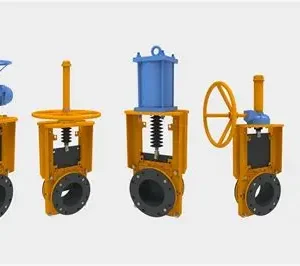
How Do Valves Work?
A valve works by using a movable part—such as a disc, ball, or gate—to either open, close, or partially block the flow inside a pipe.- The medium flows freely when the valve is open.
- When it is closed, the flow is stopped.
- In between, the valve can throttle or regulate the flow.
Valve Opening Methods Explained
Valves differ not just in shape but also in how they open:- Linear Motion Valves – The disc moves straight up/down. Example: Gate Valve, Globe Valve.
- Rotary Motion Valves – The disc rotates around an axis. Example: Ball Valve, Butterfly Valve, Plug Valve.
- Quarter-Turn Valves – A quick 90° turn goes from fully open to fully closed. Example: Ball Valve, Butterfly Valve.
- Multi-Turn Valves – Several turns are required, giving better control for throttling. Example: Globe Valve.
Types of Common Valves
Here are some easy-to-understand types you’ll often encounter:1. Ball Valve
- Imagine a hollow ball inside the pipe, with a tunnel through it. Rotate it 90°, and the tunnel lines up, letting the flow through. Turn it again, and it blocks the pipe.
- It’s quick and trusted for shutting things off. Great for when you need a simple “on/off” job.
- Think of a sliding door that lifts to open, lowers to close.
- When fully open, fluids pass freely, but it’s not made for fine control—just full open or shut.
- Has a round body inside, and a disc you turn to adjust.
- Excellent for more precise control—perfect when you want just the right amount of flow.
- A disc on a rod rotates inside the pipe. When turned 90°, it stops the flow.
- Neat, lightweight, and cost-effective for quickly stopping or allowing flow.
- Let’s flow go one way, but blocks it if it tries to go back—no handle needed. Common in systems where backflow could cause trouble.
- A safety valve that opens automatically when pressure gets too high, letting excess fluid escape.
- This protects pipes and equipment from damage.
Valve Sizing Explained: Keeping Things Flowing
Choosing the right valve size is crucial for efficiency:- Undersized valves → Cause high pressure drop and damage (cavitation).
- Oversized valves → Lead to poor control and instability.
- Flow rate (Q)
- Pressure drop (ΔP)
- Fluid type and properties (density, viscosity, temperature)
- Valve flow coefficient (Cv)
Why Valves Matter
Valves are everywhere—from your home plumbing to large industrial machinery. They:- Let us turn the water on and off.
- Help maintain safe operating pressure.
- Control temperatures, mixture, and flow rates in industrial processes.
- Maintain systems that are efficient, safe, and well-managed.