

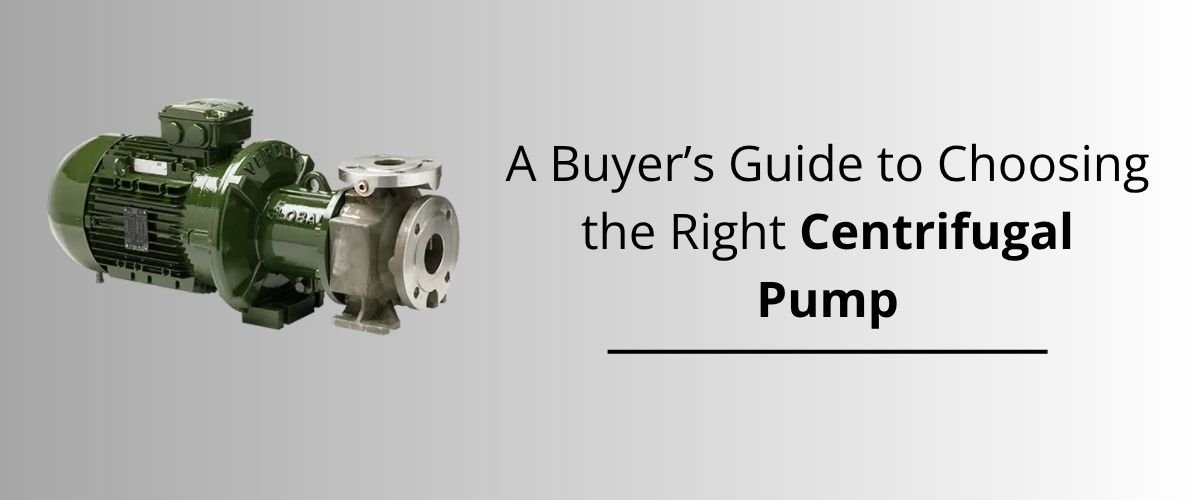
Centrifugal pumps are among the most widely used pumps in industrial, commercial, and municipal applications. They’re valued for their efficiency and ability to handle a wide variety of liquids. Whether you need to move water, chemicals, or slurries, selecting the right centrifugal pump is critical for ensuring smooth operations, long service life, and cost efficiency.
This guide breaks down the essential factors to consider when purchasing a centrifugal pump, helping you make an informed decision that meets your process needs.
Understanding Centrifugal Pumps
A centrifugal pump makes use of a rotating impeller to convert kinetic energy into a liquid, developing pressure and stress. Because of their truthful design, they’re regularly extra affordable, less complicated to maintain, and incredibly green as compared to other pump types.
Centrifugal pumps are normally used in:
– Water delivery and treatment- Centrifugal Pump are used in supporting municipal supply systems.
– HVAC systems – heating, cooling, and air-conditioning applications.
– Industrial processes – chemicals, meals and beverages, pharmaceuticals.
– Agriculture – irrigation and crop management.
Key Factors to Consider When Choosing a Centrifugal Pump
1. Flow Rate Requirements
Flow price refers back to the quantity of liquid a pump can pass inside a selected time (commonly measured in litres in keeping with minute or gallons in keeping with minute).
– Determine your minimum, average, and most glide needs.
– Oversizing can waste strength, whilst undersizing may also stress the pump.
– Match the pump ability carefully to the machine call for efficiency.
2. Total Dynamic Head (TDH)
TDH is the whole resistance the pump ought to triumph over to transport liquid through the machine. It combines:
– Static head (vertical lift).
– Friction losses (piping, fittings, valves).
– Pressure head (machine stress).
– Accurate TDH calculation guarantees the pump presents sufficient stress without overloading the motor.
3. Fluid Properties
The nature of the fluid being pumped directly impacts pump selection. Consider:
– Viscosity – Thick or sticky liquids may require special impeller designs.
– Temperature – High temperatures may affect seals, bearings, and casing.
– Corrosiveness – Aggressive chemicals require resistant materials like stainless steel or special coatings.
– Solids content – Suspended particles can cause abrasion and clogging.
4. Material Selection
Choosing the right material extends pump life and minimises the need for maintenance.
– Cast iron – cost-effective, suitable for clean water.
– Bronze – good for marine and seawater applications.
– Stainless steel – excellent corrosion resistance for the chemical and food industries.
– Special alloys – designed for extreme conditions or abrasive fluids.
5. Efficiency and Energy Consumption
Energy costs often exceed the initial pump purchase price over its lifespan. To optimise efficiency:
– Select a pump that operates near its Best Efficiency Point (BEP).
– Avoid running pumps far above or below their rated capacity.
– Consider variable frequency drives (VFDs) for energy savings in variable demand applications.
6. Installation Environment
The physical space and location of your pump influence design choices.
– Horizontal vs. vertical pumps – depends on footprint and system layout.
– Flooded suction vs. suction lift – impacts priming and efficiency.
– Ambient conditions – humidity, dust, or temperature may require special enclosures.
7. Maintenance and Serviceability
– Maintenance plays a crucial role in pump reliability.
– Choose pumps with easily replaceable seals and bearings.
– Look for local service availability and spare parts support.
– Simpler designs reduce downtime and training needs for operators.
8. Cost Considerations
– The lowest upfront price may not always deliver the best value.
– Initial cost – pump, motor, and accessories.
– Operating cost – energy consumption, spare parts, and labour.
– Life cycle cost – total expense over the pump’s working life.
– Investing in a higher-quality pump may reduce downtime and total costs over time.
Common Mistakes to Avoid When Buying a Centrifugal Pump
Buying a centrifugal pump may seem straightforward, but it’s a decision that requires careful consideration. Many buyers make costly mistakes by overlooking key factors such as sizing, efficiency, and compatibility with their system.
Understanding these common pitfalls not only saves money but also ensures long-term reliability and performance of the pump.
– Overlooking system requirements – guessing flow or head instead of calculating leads to poor performance.
– Ignoring fluid compatibility – using incorrect materials causes premature failure.
– Oversizing the pump: It wastes energy and increases operating costs.
– Neglecting maintenance planning – lack of serviceability considerations results in downtime.
– Focusing only on purchase price – without considering the total cost of ownership.
How to Ensure the Best Pump Selection
Choosing the right pump is critical for efficiency, reliability, and long-term cost savings. The best selection depends on matching pump design to the fluid type, flow requirements, and operating conditions. A careful evaluation up front helps avoid breakdowns, downtime, and unnecessary expenses.
– Work closely with a trusted supplier or pump expert.
– Provide accurate system data: flow, head, and fluid properties.
– Request a pump curve: check performance across your operating range.
– Consider future expansion needs or process changes.
Invest in Performance and Reliability
The process of choosing a centrifugal pump goes beyond technical specifications. It’s about balancing efficiency, durability, and long-term value. When you take the time to compare options carefully, consider the nature of your fluid, and evaluate operational conditions, you’re not just buying a pump; you’re investing in the smooth operation of your entire system.
A well-chosen pump delivers consistent performance, protects against costly failures, and supports growth as your needs evolve.
For any query related to the centrifugal pump, contact us here
– Alert Building, IDA Business Park, Southern Cross Road, Bray, Co.Wicklow, A98 NY65, Ireland
– +353 1 2750801
– +353 (0) 87 130 1029
– info@thomsonprocess.ie