

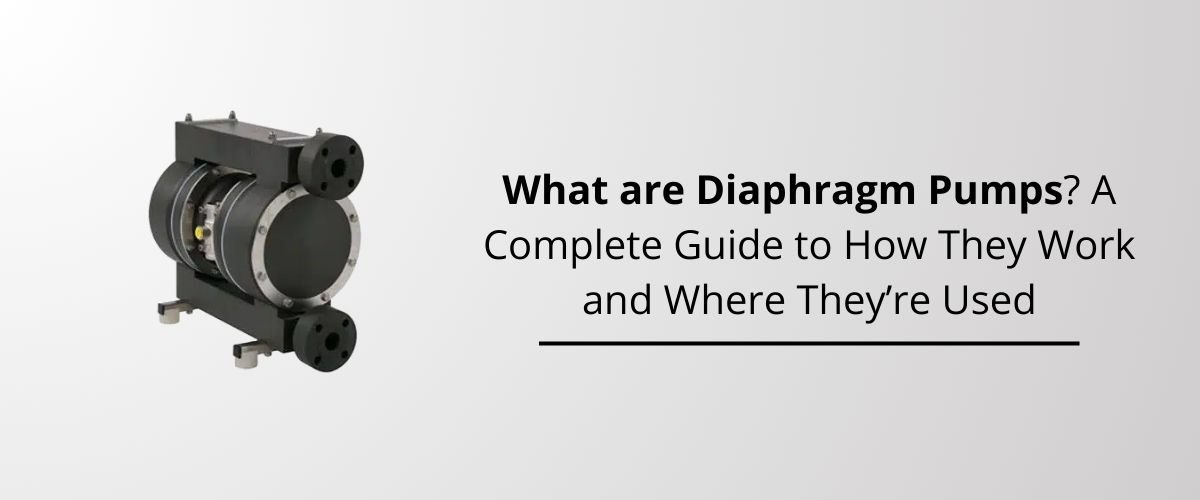
In many processes, transporting fluids reliably and efficiently is extremely important. Whether it is water treatment, chemical transfer, or food products, the type of pump used can make a huge difference in performance and safety. One of the most productive pumping results available at the moment is the diaphragm pump.
This guide will walk you through what diaphragm pumps are, how they work, their crucial advantages, and the diligence that drives them.
What’s a Diaphragm Pump?
A diaphragm pump is a type of positive displacement pump that uses a flexible diaphragm, paired with check valves, to move fluid. Unlike centrifugal pumps, which operate on impellers, diaphragm pumps work by creating a vacuum that draws fluid in and also discharges it under pressure.
Because the fluid doesn’t come into contact with a moving mechanical corridor, diaphragm pumps are ideal for handling abrasive, thick, or sharp liquids, as well as sensitive fluids in aseptic operations.
How Does a Diaphragm Pump Work?
At the heart of a diaphragm pump is a flexible diaphragm that moves back and forth to displace fluid. This movement creates an interspersing suction and discharge conduct, controlled by bay and outlet check faucets. When the diaphragm retracts, a vacuum is formed inside the chamber, pulling liquid in through the bay stopcock. As the diaphragm pushes forward, the fluid is compressed and forced out through the outlet stopcock.
The simplicity of this medium makes it both dependable and effective. It operates in a repeating cycle made up of three main stages.
Suction Stroke
– When the diaphragm flexes backwards, it creates a vacuum inside the pump chamber.
– This vacuum causes the bay check stopcock to open, allowing liquid to be pulled into the chamber.
Discharge Stroke
– As the diaphragm moves forward, it compresses the fluid inside the chamber.
– The increase in pressure forces the outlet check stopcock to open, pushing the liquid out of the pump.
Reiteration of the Cycle
– These suction and discharge strokes are continuously in a metrical manner.
– The process ensures a steady inflow of liquid, indeed, when handling thick or abrasive fluids.
Advantages of Diaphragm Pumps
The advantages of diaphragm pumps go beyond simple continuity. Their unique design allows them to handle fluids that would damage other pump types. For instance, they can safely transfer sharp acids, abrasive slurries, and thick accoutrements without losing effectiveness. They’re also able to handle fluids containing suspended solids without clogging.
Conservation requirements are fairly low because there are smaller moving corridors in contact with the fluid. When tubing or diaphragms wear out, reserves are straightforward and cost-effective. Combined with their leak-free design, diaphragm pumps give long-term functional savings while ensuring safety and compliance in sensitive applications like medicinals and food processing.
They offer several advantages that make them suitable for a wide range of diligence:
– Capability to Handle Delicate Fluids: Effective with sharp, abrasive, thick, and shear-sensitive liquids.
– Sot Running Capability: Can operate without fluid for short periods without damage, unlike numerous other pump types.
– Tone Priming: Excellent for operations where pumps need to start without external priming.
– Leak-Free Operation: With a sealed design, the threat of leaks or impurity is virtually low.
Where are Diaphragm Pumps Used?
One of the most notable features of diaphragm pumps is their versatility across various applications. In medicine, they’re extensively used for sterile fluid transfer and perfect dosing, where impurity must be avoided at all costs. In the food and libation sector, they handle constituents like gravies, bathos, and dairy products while maintaining hygiene norms.
– Medicinals: For sterile liquid transfer, dosing, and cleanroom operations.
– Food & Beverage: Safely handles constituents like bathos, gravies, dairy, and potables without impurity.
– Chemical Assiduity: Pumps aggressive or dangerous fluids such as acids, detergents, and slurries.
– Water & Wastewater Treatment: Generally used for dosing chemicals and handling sludge.
– Oil & Gas: Reliable for handling drilling slush, petrochemicals, and other gruelling fluids.
Common Challenges and How They’re Managed
Although diaphragm pumps are known for their continuity and versatility, like any outfit, they can face certain challenges during operation. The good news is that with the right measures, these issues are manageable and infrequently compromise long-term performance.
1. Palpitation
Because diaphragm pumps operate in cycles, fluid delivery can occasionally be uneven, resulting in palpitation. In most operations, this isn’t critical, but for processes that demand steady inflow, similar to perfect dosing or laboratory work, it can be a concern.
How to Manage It: Installing a palpitation dampener is an effective way to smooth out the inflow and maintain harmonious affairs. Double-diaphragm designs can also reduce palpitations naturally.
2. Noise with AODD Pumps
Air-operated double-diaphragm ( AODD) pumps are dependable but can induce noise during operation, especially if not installed correctly. Inordinate sound may affect plant comfort or indicate inefficiency.
How to Manage It: Proper installation, including securing the pump on a stable face and icing acceptable air force, significantly reduces noise. Adding mufflers or sound-dampening accessories can further ameliorate operation.
Why Diaphragm Pumps Remain a Trusted Choice
Diaphragm pumps stand out as one of the most versatile and reliable solutions in fluid handling. Their ability to manage everything from delicate pharmaceutical ingredients to abrasive slurries makes them indispensable across industries. While challenges like pulsation, noise, or diaphragm wear can occur, these are easily managed with proper installation, routine maintenance, and the right accessories.
For businesses seeking durability, safety, and efficiency, diaphragm pumps continue to deliver exceptional performance. Whether in cleanroom environments, chemical plants, or water treatment facilities, they remain a trusted choice that balances practicality, cost-effectiveness, and long-term reliability.
For any query related to the diaphragm pump, contact us here
– Alert Building, IDA Business Park, Southern Cross Road, Bray, Co.Wicklow, A98 NY65, Ireland
– +353 1 2750801
– +353 (0) 87 130 1029
– info@thomsonprocess.ie